Steps to designing a professional web page from start to finish

Custom and professional website design
Designing a successful webpage doesn’t begin with choosing colors, nor does it end with publishing it online. A good webpage is like a clear path that guides the visitor from question to answer, from interest to interaction. Therefore, every webpage needs a specific purpose, well-organized content, a user-friendly design, and speed that makes browsing easy.
By understanding the steps of webpage design correctly, it becomes possible to create a page that serves the user and supports the website’s objectives, whether that objective is to showcase a service, sell a product, gather contact information, or build a strong digital presence for the company.

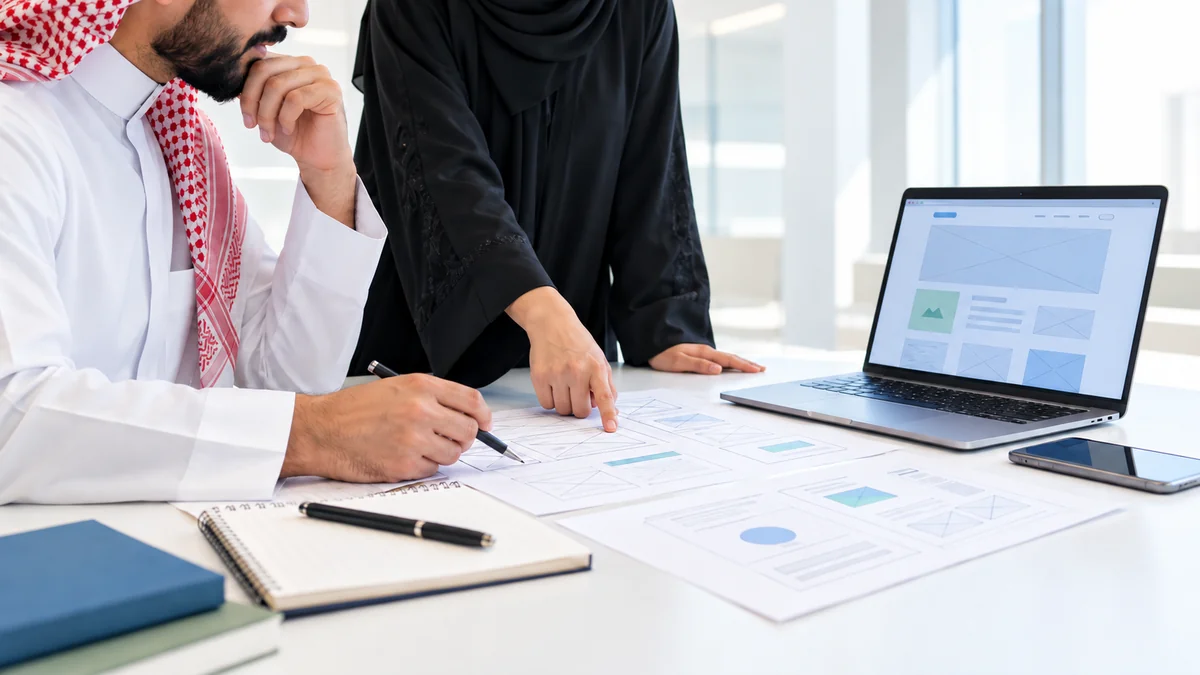
What is a website?
A website is a group of interconnected pages that are displayed online under one domain name, and represents a company, project, store, person, institution, or digital platform, where the visitor enters the site through the browser, and then moves between its pages to access the information, services, or products that he is searching for.
The site usually consists of basic pages such as the home page, the About Us page, service pages, the blog, the contact page, and perhaps product, booking, or login pages depending on the type of project. Each page within the site plays a specific role in the user journey, so the site organization must be clear and easy to navigate.
The website is not limited to being a digital interface only, but it can be a channel to attract customers, display the commercial identity, receive orders, publish content, manage sales, or provide a complete service online. This is why the method of building a website varies depending on its purpose. The company’s introductory website is different from the online store, and the educational platform is different from the booking website or customer portal.
What is a web page?
If you want to create professional web pages that reflect your brand identity, provide a distinctive user experience, and help improve your site’s ranking in search results, contact us today, and we will help you design a complete website that meets the needs of your business in Saudi Arabia.
The importance of creating a web page or website
Having a webpage or website gives the project an official space that customers can access at any time. Collaborating with a website design company also helps present services and information in an organized manner, rather than relying on scattered posts or repetitive messages. Among the most important benefits of creating a webpage or website are:
Different types of web pages and websites
Web pages and websites vary depending on their purpose. Some are built for information, some for sales, some for booking, education, or providing ongoing content. Some of the most important types of web pages and websites include:
- Company Profile: A company profile showcases company information, services, and contact details. It’s ideal for businesses, organizations, and activities seeking a formal online presence. Its success hinges on a clear message, easy navigation, and high-quality service presentation.
- E-commerce Store: An e-commerce store allows you to display and sell products online. It requires clear product pages, a shopping cart, payment methods, shipping options, and a return/exchange policy. A store’s strength lies in the ease of the purchase journey and the speed with which you can access your products.
- Landing Page: Landing pages are often used in advertising campaigns to guide visitors to a single action, such as registration, requesting a quote, or purchasing a service. They should be concise, compelling, and focused on a single objective without excessive links that might distract the visitor.
- Blog: A blog publishes articles, guides, and informative content. It helps companies attract traffic from search engines, answer customer questions, and gradually build trust. A blog requires a well-organized content plan and internal linking between articles and services.
- News Website: A news website relies on publishing regularly updated news and articles. It needs clear categories, fast loading speeds, and a comfortable reading experience. It also requires a content management system that can be easily updated daily.
- Custom Website: A custom website is built according to a specific need within the company, such as a customer portal, ordering system, control panel, or internal platform. It requires careful analysis before design and programming to ensure it efficiently serves the required functions.
Read also: Requirements for creating a commercial website
Basic components of a web page
A good web page consists of elements that work together to provide a clear and comfortable experience, where each component has a role in attracting attention, explaining the idea, guiding the visitor, or prompting them to interact; and some of the most important basic components of a web page are:
- The main headline: The main headline is the first thing that catches the visitor’s eye. It should be clear, direct, and quickly explain the page’s topic. A strong headline helps the user know they’ve come to the right place.
- The introduction: The introduction briefly explains what the visitor will find on the page. Therefore, it should be engaging, informative, and concise, paving the way for the rest of the content. A good introduction makes the reader want to continue reading.
- The main content: The main content is the part that explains the service, product, or topic. It should be organized with clear subheadings and paragraphs. Each paragraph should add new value and answer an important question for the visitor.
- Images and visual elements: Images help clarify the idea and make the page more attractive. They should be appropriate to the content, lightweight, and of good quality. Random images can weaken the page rather than enhance it.
- Call-to-action buttons: Call-to-action buttons direct the visitor to the desired action, such as contacting, requesting a quote, registering, or purchasing. Therefore, they should be clearly displayed in a suitable location and use direct language that tells the visitor what will happen after clicking.
- Menus and Internal Links: Menus help visitors navigate between website pages easily. Internal links connect a page to other useful pages within the site, improving user experience and helping search engines understand the site’s structure.
- Contact Forms: Contact forms make it easy for visitors to submit their information or requests. Therefore, they should be concise and clear, as long forms may discourage submissions. Each field within the form should have a clear purpose.
- Footer: The footer typically appears at the bottom of the page and contains important links, contact information, policy links, and possibly social media accounts. It helps visitors access additional information without having to scroll back up the page.
What are the steps to create and design a website?
Creating a complete website requires clear stages, starting with planning and ending with launch and follow-up. Each stage paves the way for the next and reduces the chances of errors during implementation. Among the most important steps in creating and designing a website are:
- Defining the Website’s Purpose: Before starting the design process, you must define the website’s primary purpose. Is it to showcase services? Sell products? Collect contact information? Publish content? Clarity of purpose helps in selecting the appropriate pages, messages, and design approach.
- Audience Analysis: Understanding your audience helps you build a website that addresses their actual needs. Therefore, you must know what visitors are searching for, what questions they have, and the best way to present information to them. This step influences both the design and the content.
- Competitor Analysis: Analyzing competitors reveals how services are presented in the market and the strengths and weaknesses of similar websites. The goal is not to imitate competitors, but to create a better and more intuitive experience for visitors.
- Website Structure Planning: The website structure defines the main pages and how they are linked. A good layout makes navigation easier and helps search engines understand the relationship between pages. Therefore, each page should have a clear role within the website.
- Content Preparation: Content explains the idea and persuades the visitor. Therefore, page text, headings, images, FAQs, and contact information should be prepared as far in advance as possible. Good content saves a lot of revisions later.
- Interface Design: In this stage, the visual layout of the pages is prepared, and the distribution of elements, colors, fonts, and buttons is determined. The design must be both aesthetically pleasing and user-friendly to serve its purpose and avoid distracting the visitor.
- Website Programming: Programming transforms the design into web pages that function in the browser. This includes building the interface, setting up the control panel, linking forms, enabling required features, and securing the site. The quality of the programming directly impacts speed, performance, and stability.
- Website Testing: Before launch, links, forms, page speed, mobile compatibility, and browsing experience on multiple browsers must be tested. This stage helps identify errors before visitors reach the site.
- Website Launch and Ongoing: After testing, the website is published on the domain and hosted. Post-launch ongoing monitoring is crucial for tracking performance, fixing any issues, updating content, and optimizing pages based on visitor behavior.
Steps to designing a professional web page
Designing a professional webpage requires a clear organization of ideas before choosing the final layout. A successful page depends not only on aesthetics but also on its ability to easily guide the visitor to the required information or action. Some of the most important steps in designing a professional webpage include:
- Define the Page’s Purpose: Each page should have one clear purpose. This could be to explain a service, sell a product, collect data, or direct the visitor to another page. A specific purpose makes the design more focused and prevents clutter.
- Understand the Visitor’s Intention: Before writing or designing the page, you must understand why the visitor is coming here. Are they looking for information? A comparison? A price? A solution to a problem? When you understand the visitor’s intention, you can arrange the content in a way that answers their questions in the right order.
- Write a Strong and Clear Title: The title is the starting point of the page. It should clearly state the benefit or topic without ambiguity. A good title doesn’t exaggerate but makes the visitor know why they should continue reading.
- Organize the Content into Sections: Dividing the page into sections makes it easier to read and prevents the visitor from feeling overwhelmed. You can use subheadings, short paragraphs, tables, and bullet points. Good organization makes the page more understandable.
- Choose a Simple and Convenient Design: A simple design doesn’t mean the page is weak; it means it focuses on what’s important. White space, legible fonts, and harmonious colors enhance browsing and help visitors easily follow the content.
- Add appropriate visual elements: Images, icons, and videos help explain the concept quickly. Visual elements should be relevant to the content, not just decorative. Images should also be compressed to avoid impacting page speed.
- Include a clear call to action: After the visitor understands the page content, they should know their next step. Should they contact you? Request a quote? Buy? Register? A clear call to action makes the page more effective and increases conversion rates.
- Optimize the page for mobile devices: Most users browse on mobile devices, so the page should be responsive and easy to use on smaller screens. Text should be clearly displayed, buttons should be easy to click, and forms should be simple.
- Improve loading speed: A slow page loses a significant portion of visitors. Therefore, reduce image sizes, use clean code, and choose a reliable hosting provider, as page speed impacts the user experience and can improve search engine rankings.
- Testing the page before publishing: Before launching the page, review the text, links, buttons, forms, and mobile-friendliness. Testing protects the page from minor errors that could negatively impact the visitor experience or prevent requests from being fulfilled.
Tips for designing a successful website
A successful website design requires clarity and focus more than visual clutter. Every element within the site should serve the visitor experience and the company’s purpose. Among the most important tips for designing a successful website are the following:
What types of programming languages are used in website design?
Website design and development relies on a range of languages and technologies, each with its own role depending on the part of the site it works on. Some languages build the structure, some format the appearance, and some add interactivity or manage data. Among the most important programming languages and technologies used in website design are:
How to choose hosting and a domain name for a web page?
Choosing the right hosting and domain name is an essential step before launching a web page or website; the name helps customers find you, and hosting affects the website’s speed, stability, and security; to choose correctly, consider the following points:
How long does it take to design a website?
The time required to design a website varies depending on its type, size, and level of customization. A simple informational website might take less time than an online store or a customized platform with user accounts, control panels, and multiple features.
Therefore, there’s no single timeframe that works for all projects. However, the estimated time can be determined by considering the number of pages, the required content, the design approach, and the technical specifications.
Typically, a project goes through several phases that affect its duration, including planning, content writing, interface design, programming, testing, and launch. If the content is ready and the requirements are clear, implementation is faster. However, if the idea requires extensive analysis or specific features, the project may need more time to ensure a high-quality result. Factors that influence website design time include:
How much does website design cost?
Website creation costs vary depending on the project, as each site requires a different level of planning, design, programming, and content. A simple informational website is often less expensive than an online store or a custom platform because it requires fewer pages and fewer features.
When estimating costs, design alone shouldn’t be considered. A professional website needs a user-friendly experience, clear content, mobile-responsive design, good speed, security, search engine optimization (SEO), and possibly hosting and technical support. These elements affect the cost but enhance the website’s quality and make it more effective for the project.
Some ready-made options may seem cheaper initially, but their capabilities can become limited as you expand or add new features. Custom design and programming may require a higher budget, but they offer greater flexibility and a more distinctive identity. Among the most important factors affecting website design costs are:
Internet Solutions for designing professional web pages and websites
Choosing Internet Solutions for your website design needs saves you a lot of time and effort. A successful website requires a team that understands design, programming, user experience, content, and search engine optimization (SEO). A good webpage isn’t built as an isolated element, but rather as part of a complete digital presence that helps a company reach customers and convert their interest into contact or a purchase.
Internet Solutions offers professional website design and development services for companies that want a clear, fast, and mobile-friendly website. The service is based on first understanding the project’s objective, then designing a user experience that helps visitors easily access information. Internet Solutions also focuses on building websites optimized for search engine rankings, which helps the site compete more effectively.
The work doesn’t stop at design alone. The company provides integrated services such as Saudi hosting, technical support, e-commerce store creation, SEO, and digital marketing. This integration allows the client to manage their digital project from one place, instead of dealing with multiple providers for each part of the website. If you are looking for a professional implementation that takes into account the steps of designing a web page from planning to launch, contact the Internet Solutions team now to get a website that expresses your brand and gives your visitors a clear and easy experience.
conclusion
Designing a professional webpage requires understanding its purpose, knowing the target audience, structuring the content, choosing a suitable design, ensuring stable programming, and rigorous testing before publication. Each of these steps impacts the visitor experience and the page’s ability to achieve the desired outcome.
When webpage design steps are implemented correctly, the page becomes more than just an aesthetically pleasing format; it transforms into a tool that helps visitors understand, assists the company in receiving orders, builds trust, and enhances its digital presence.
Always begin by defining the page’s purpose, then build the design and content around it. A successful page doesn’t leave visitors confused; instead, it guides them smoothly toward the information or action they came for.
Frequently Asked Questions
Share this article